On September 10, 2025, the annual event of the Ukrainian History Global Initiative took place in Kyiv. It was dedicated to the theme of early life on Earth, the evolution of living beings, Neolithic Trypillian cities, and modern archaeological methods. Although the topics covered an enormous time span, they addressed a single question — what new insights does contemporary science offer us about sustainability of human life on Ukrainian lands from a long-term historical perspective.
The event was attended by heads of foreign diplomatic missions, directors of cultural institutions, scholars, and journalists.
Victor Pinchuk, UHGI Founder and Trustee, Ukrainian philanthropist and businessman, noted: “The idea for this project came to me long before Russian agression, and the full-scale invasion only further confirmed its relevance and importance. War is our enemy’s attempt to halt the historical journey of the Ukrainian people. Our enemy uses pseudo-history as a weapon, trying to justify interference in our present and steal our future through a fabricated past. Ukrainian History Global Initiative aims at research and telling the truth. Perhaps, if we succeed, it will also be a story of love. Because the better you understand our history, the more you love it—and the more you love, the better you defend.
We have a unique team for this unprecedented multidisciplinary project. We hope this project will help us intellectually grasp what we feel in our hearts — how important Ukraine is to us and why,” emphasized Victor Pinchuk. He said that the Initiative’s ambitions extend to researching not only to the times when the first humans appeared on Ukrainian territory, but also to the moments when these territories were still forming and first life was emerging here.
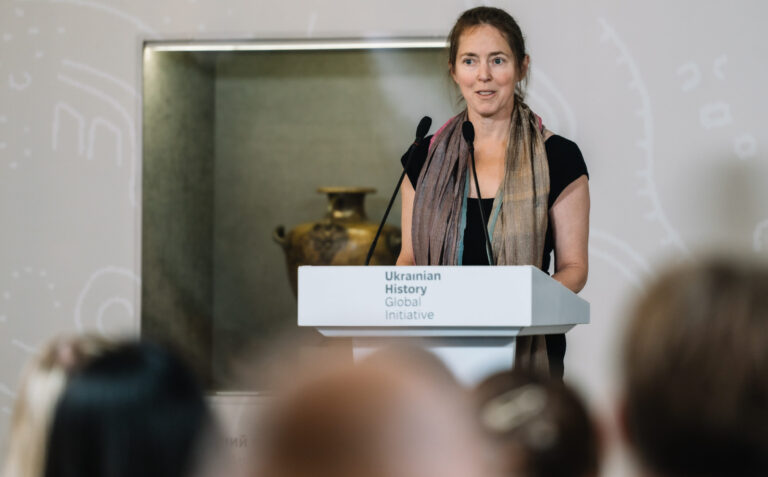
The main presentation on the origins of life on Earth was delivered by evolutionary biologist Olivia Judson. “Life is a geological force. Nearly a century ago, Volodymyr Vernadsky, the first president of the Ukrainian Academy of Sciences, argued in his book ‘The Biosphere’ that there is no chemical force on the planet more constant and powerful than living forms put together. The histories of life and Earth can be understood as a series of five expansions of energy sources: geochemical energy, sunlight, oxygen, flesh, and fire. With each expansion, the planet became home to a greater number and diversity of life forms, and their impact on the planet became increasingly powerful. This gives me a profound sense of connection not only with other forms of life, but also with water, rocks, air — and reveals patterns in Earth’s history, inscribing humans into the deepest layers of this history,” – noted Olivia Judson during her presentation.
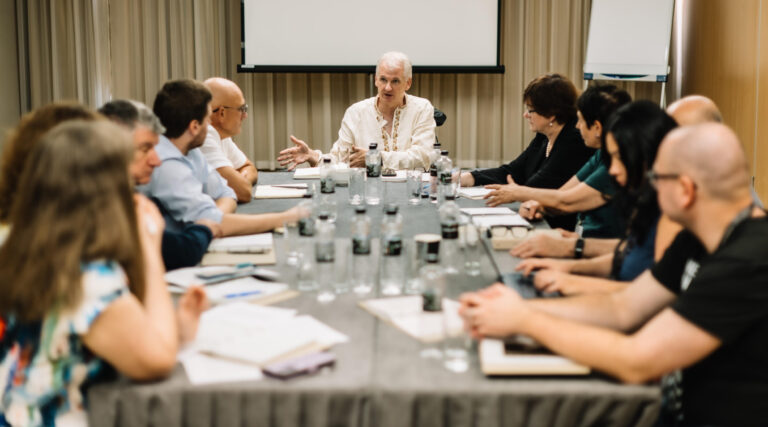
Professors Albert Hafner from the University of Bern and Johannes Müller from Kiel University discussed with Timothy Snyder, head of the project’s Academic Council, the functioning of Neolithic Trypillian cities (circa 4000 BCE). The scholars showed that although this history seems familiar, it is actually one of the least researched: we are still trying to understand how neolithic cities functioned, what their economy and social structure were like.
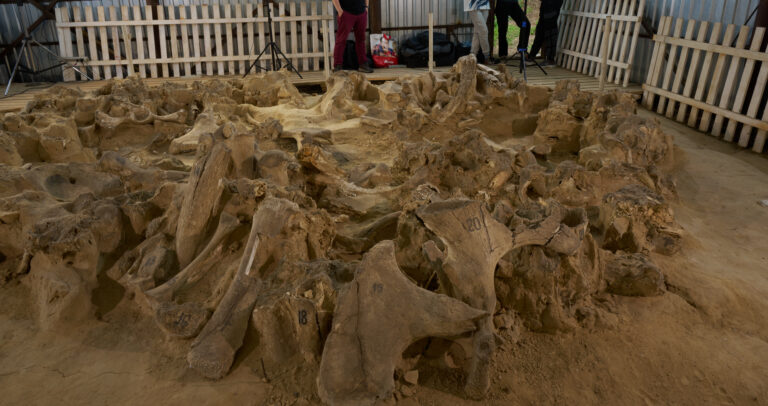
“Modern archaeology is a science that stands at the frontier of scientific knowledge about the world and about ourselves. An archaeologist investigates not so much ancient epochs as analyzes humanity’s general path — from the beginning of existence to the present. Archaeological heritage is a phenomenon of intrinsic value, like nature, because each archaeological discovery can transform our understanding of ourselves. Archaeology is especially relevant now, during wartime, when we observe massive loss of archaeological heritage,” insists Pavlo Shydlovskyi from Taras Shevchenko National University of Kyiv, researcher of the theme “Humans in the Changing Environment of the Pleistocene.”
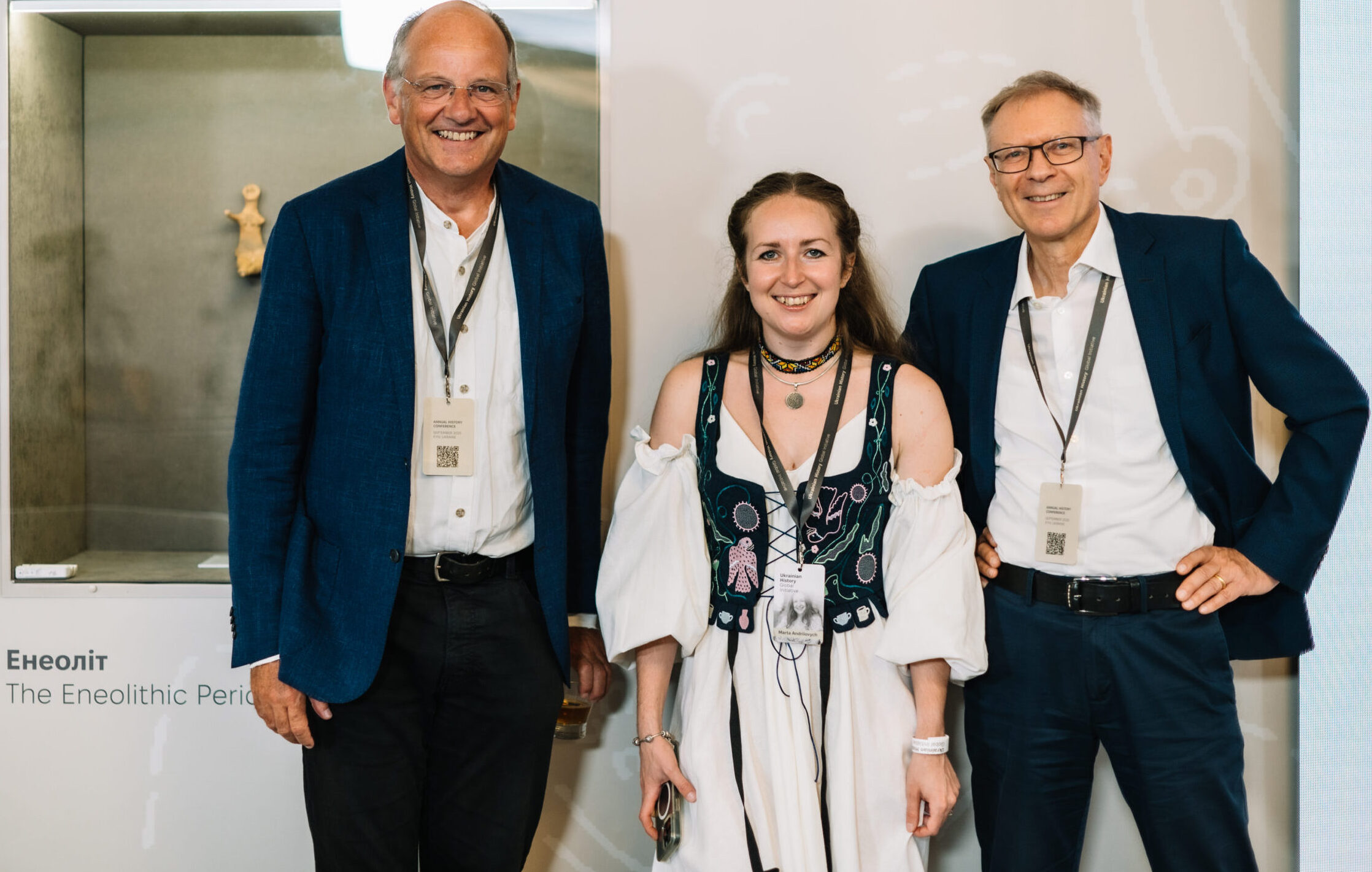
Marta Andiiovych, a scholar from Oxford University, summarized “Archaeology is a modern science whose goal is to tell the story of the human past — a past that, unlike the present, was not recorded by media or captured in early historical works, and often remained unnoticed yet significant. Emerging in the 19th century, archaeology has evolved together with time itself. Today, research is multifaceted: from field excavations and laboratory analysis to computer-based methods. These approaches provide precise data, from radiocarbon dating to the identification of plant and animal species. Participation in a large-scale project like UGHI offers archaeologists a unique chance to bring Ukraine’s deep history closer to public”
The discussion panels were preceded by an exhibition of artifacts from the collections of the National Museum of the History of Ukraine. The treasure from Mount Borlog, discovered in 1996 in the Carpathians, drew particular attention. The treasure demonstrates the scale of international trade during the Bronze Age (3rd – end of 2nd millennium BC): weapons and axes from the territories of present-day Romania and Hungary were combined with local products in a single complex that researchers consider a ritual offering to the gods.